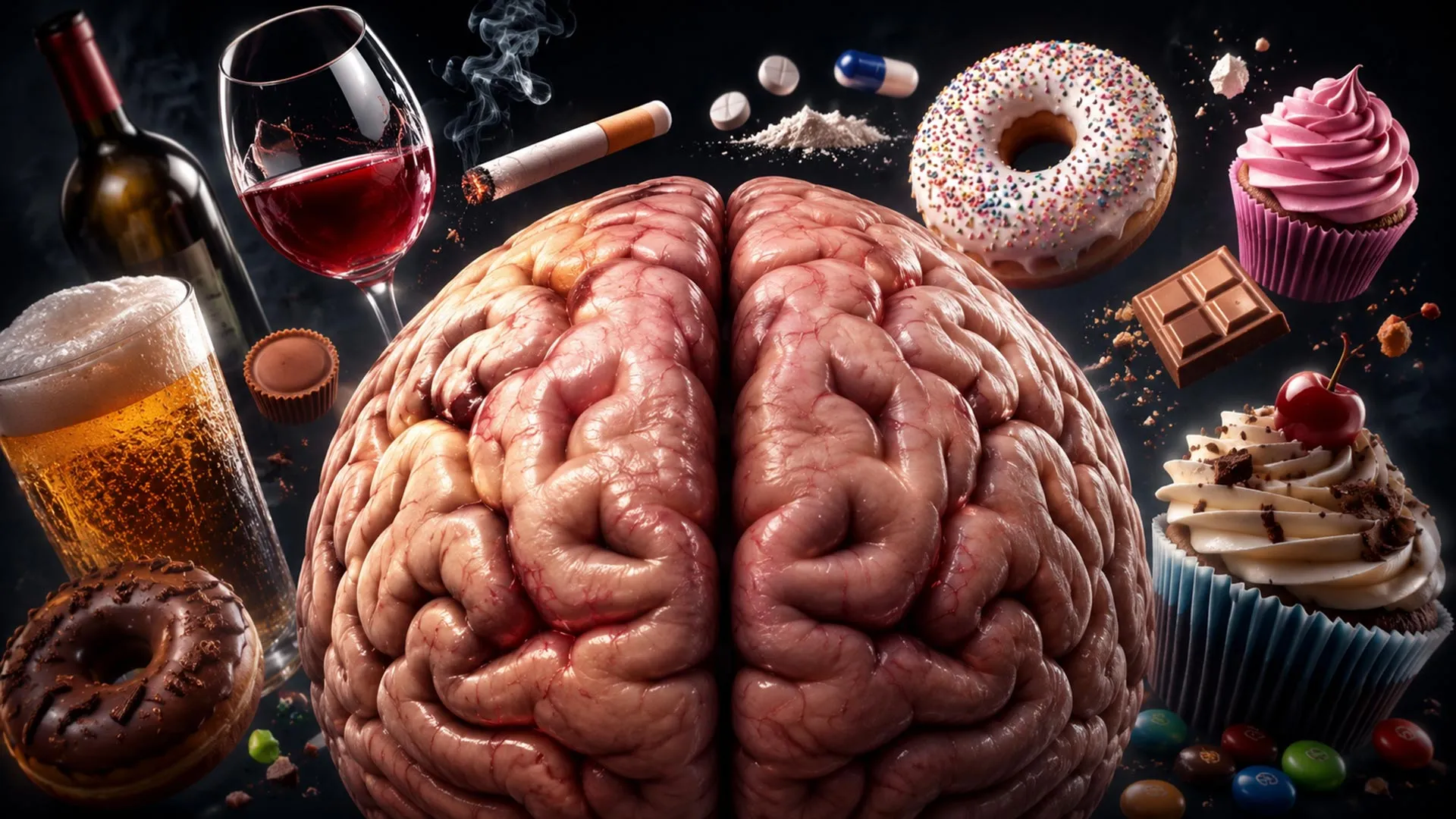
This article explores how new weight-loss drugs, like Ozempic and Wegovy, may reveal the brain's "craving center." These GLP-1 agonists, initially for type 2 diabetes, mimic a hormone to increase fullness and slow digestion, leading to significant weight loss. Crucially, they also reduce the consumption of alcohol, cocaine, amphetamines, opiates, and nicotine, suggesting a broader impact on addictive behaviors. For decades, neuroscience has struggled to understand the link between craving and consumption. While the brain's reward circuitry, involving the VTA and NAc, is known for dopamine production, these areas lack sufficient GLP-1 receptors. Researchers are now focusing on the lateral septum, a region historically linked to emotional regulation and recently identified as central to a neural network. The lateral septum receives input from the hippocampus, which handles episodic memories and spatial-temporal information. Importantly, the lateral septum contains "place cells" that respond strongly to rewards, adding "what is good in this place" to the hippocampus's data. This information is then shared with dopamine-producing regions. The lateral septum is also rich in GLP-1 receptors, making it a strong candidate for the mechanism behind the anti-consumption effects. Emerging studies show direct GLP-1 activation in the lateral septum reduces food and alcohol consumption in mice, suggesting it may prevent effective communication with other brain regions, thereby reshaping our understanding of addiction and offering new treatment avenues.
Ozempic may have revealed the brain’s hidden “craving center”
Original Source: Read on Publisher Website
Vocabulary & Phrases
| Word | Meaning | Example |
|---|---|---|
| malfunction | To fail to work correctly or as expected. | "The new software caused the system to malfunction, leading to a delay in processing orders." |
| preoccupation | The state of being completely engrossed in something, often to an excessive degree. | "His preoccupation with market trends helped him anticipate major shifts in consumer behavior." |
| eluded | To escape from or avoid being understood, found, or achieved. | "Despite extensive research, the exact cause of the economic downturn has eluded experts for months." |
| mimic | To imitate or copy the actions, appearance, or sound of something. | "The company tried to mimic the competitor's successful marketing strategy." |
| agonists | Substances that activate receptors in the brain to produce a biological response. | "New drug agonists are being developed to target specific pain receptors more effectively." |
| bariatric | Relating to the medical treatment of obesity, especially surgical procedures. | "The hospital expanded its bariatric department to meet the growing demand for weight-loss surgeries." |
| preclinical | Relating to the stage of research before testing a drug or treatment on humans. | "The drug showed promising results during preclinical trials, indicating its potential safety and efficacy." |
| implicated | To show or suggest that someone or something is involved in something. | "The recent audit implicated several departments in the budget overruns." |
Let's Discuss
How might a deeper understanding of the brain's "craving center" impact future treatments for addiction and obesity, and what ethical considerations might arise?
Comments (0)
No comments yet. Be the first to share your thoughts!
Leave a Comment