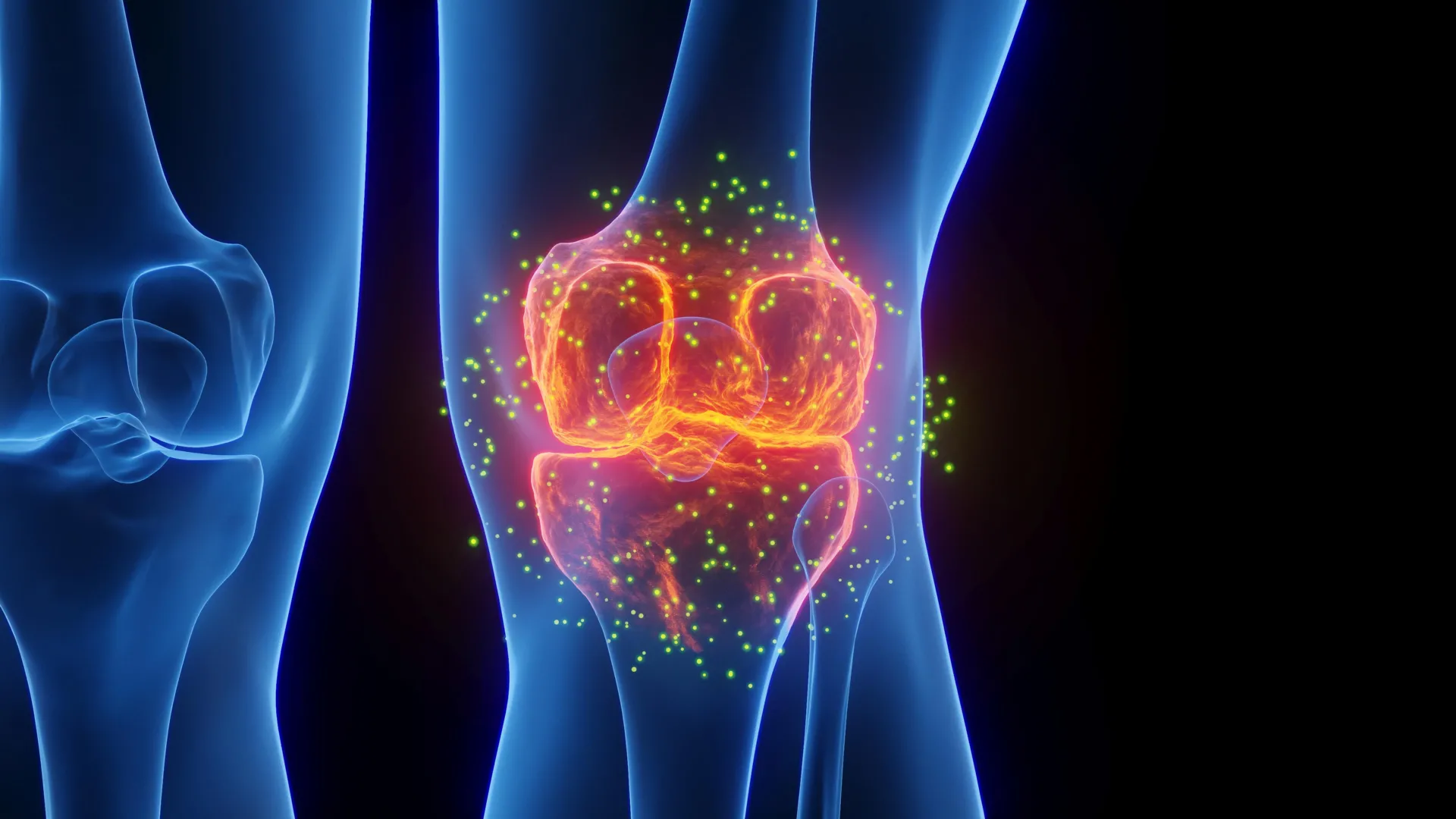
A recent Stanford Medicine-led study has unveiled a significant breakthrough in treating arthritis by targeting a protein linked to aging. Researchers successfully restored lost knee cartilage in older mice and prevented arthritis development after joint injuries. The treatment, which blocks a protein called 15-PGDH, also showed promising results in human tissue samples collected during knee replacement surgeries, prompting them to produce new, functional cartilage. This innovative approach raises the possibility of repairing damaged cartilage caused by aging or osteoarthritis through local injections or oral medication, potentially reducing the need for knee and hip replacement surgeries. An oral version of this treatment is already undergoing clinical trials for age-related muscle weakness. Osteoarthritis, affecting approximately one in five U.S. adults, is a debilitating condition that gradually breaks down joint cartilage, causing pain, stiffness, and swelling. Current treatments primarily offer pain relief or necessitate joint replacement, as no approved medication can slow, stop, or reverse the underlying disease process. The new treatment works by inhibiting 15-PGDH, a "gerozyme" that becomes more abundant with age and contributes to tissue decline. Unlike other tissues, cartilage regeneration appears to involve chondrocytes shifting their gene activity to a more youthful state, rather than relying on stem cells. This novel method of regenerating adult tissue holds substantial clinical promise for addressing arthritis.
Stanford scientists regrow lost cartilage and reverse arthritis in major breakthrough
Original Source: Read on Publisher Website
Vocabulary & Phrases
| Word | Meaning | Example |
|---|---|---|
| breakthrough | A major discovery or significant advance in a field. | "The company announced a scientific breakthrough that could revolutionize renewable energy." |
| cartilage | Flexible connective tissue found in joints and other body parts. | "Proper nutrition is important for maintaining healthy cartilage in the knees." |
| osteoarthritis | A common type of arthritis where joint cartilage breaks down over time. | "Many employees with physically demanding jobs develop osteoarthritis later in life." |
| regenerate | To grow new tissue or cells to replace damaged or lost ones. | "The company is investing in research to help patients regenerate damaged organs." |
| gerozyme | A protein that increases with age and contributes to declining tissue function. | "Understanding gerozymes could lead to new therapies for age-related diseases." |
| chondrocytes | Specialized cells responsible for producing and maintaining cartilage. | "Scientists are studying how chondrocytes respond to different growth factors." |
| inhibit | To prevent, restrict, or slow down a process or action. | "The new software update will inhibit unauthorized access to sensitive data." |
| underlying | The basic or fundamental cause of something, often not obvious. | "The consultant identified the underlying issues causing the company's low productivity." |
Let's Discuss
If an oral medication could effectively reverse osteoarthritis, what do you think would be the biggest economic and social impacts globally?
Comments (0)
No comments yet. Be the first to share your thoughts!
Leave a Comment